A small apartment doesn't rule out a real design workspace — it just removes the option of a dedicated room, which forces better decisions about what actually needs to be out on the desk. Most of the workspace advice aimed at large home offices simply doesn't apply when the desk shares a corner with a kitchen table or a bed.
The goal in a small space isn't to shrink a full studio down to fit. It's to figure out the minimum setup that still lets the work happen properly, and to make that setup easy to put away or fold up when the room needs to be something else later in the day.
Pick a Corner, Not a Wall
A corner desk uses less floor space than a wall-mounted one of the same working area, because it borrows depth from two directions instead of pushing everything forward into the room. It also tends to feel more enclosed and focused, which matters in a studio apartment where the workspace is visible from the bed or the couch all day.
If a fixed corner setup isn't possible — shared apartments and co-living rooms often don't allow it — a narrow desk on wheels that tucks against a wall when not in use keeps the option open without committing the space permanently. Casters with a locking mechanism prevent the desk from drifting mid-session, which matters more than it sounds once a stylus is involved.
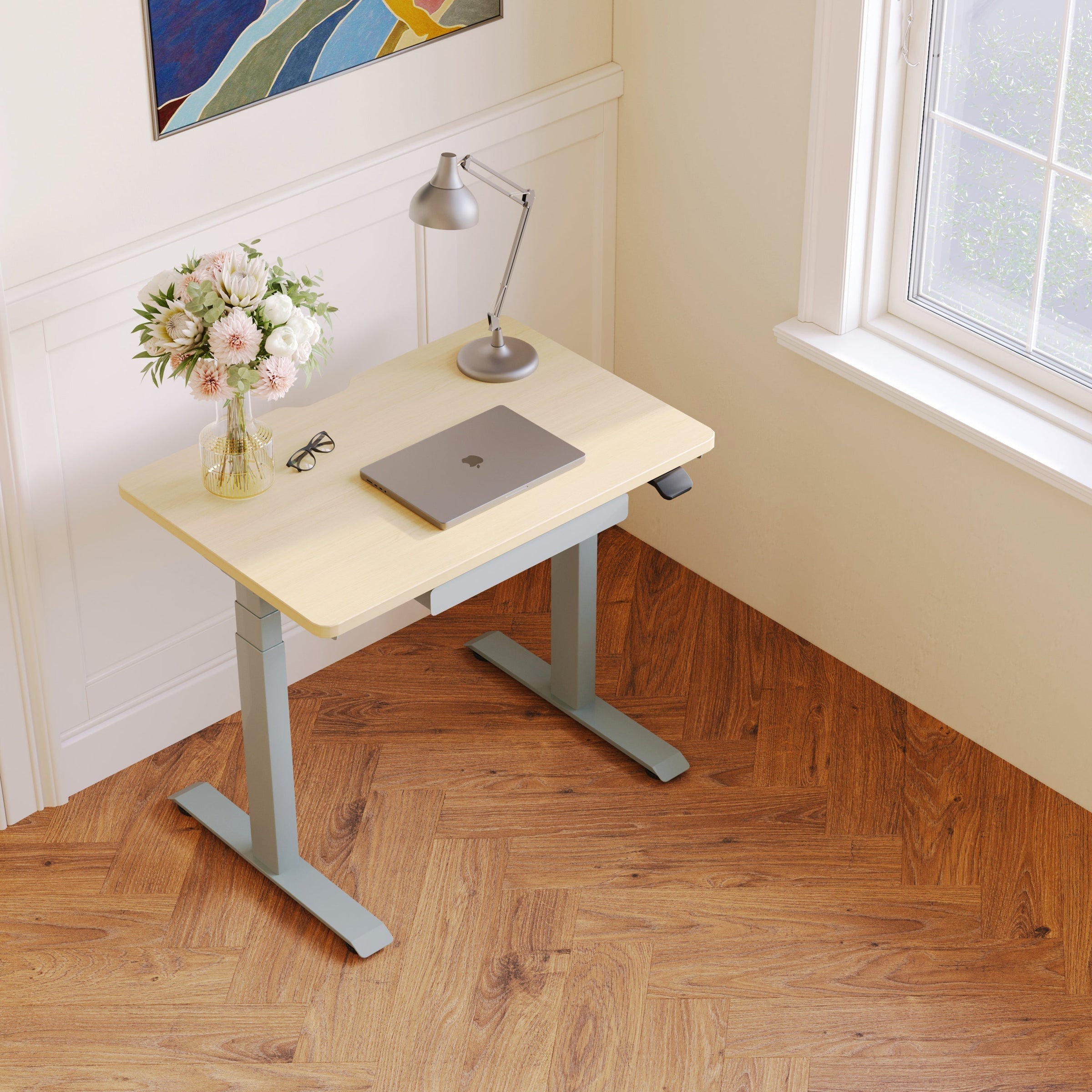
Measuring the actual corner before buying anything also avoids the common mistake of ordering a desk that technically fits the floor space but blocks a door or a closet once it's in place. This set of tips for building a better home office covers a few more of these practical measuring mistakes worth avoiding upfront.
Vertical Storage Over Floor Storage
Floor space in a small apartment is worth more than wall space, but most people furnish the opposite way around. A wall-mounted shelf above the desk for reference books, a pegboard for tools, and a monitor arm that clears the desk surface entirely all free up room without adding footprint.
A monitor arm in particular solves two problems at once in a tight space: it clears desk surface for a tablet or sketchpad, and it lets the screen sit at proper eye height without stacking it on books. For anyone renting, a clamp-mounted arm avoids drilling into a wall the way a shelf often requires, which matters if a security deposit is on the line.
Working Around Shared Spaces
Co-living and shared apartments add a layer small-space advice usually skips: other people's schedules. Noise-cancelling headphones solve part of this, but so does simply choosing work hours that don't overlap with the loudest parts of a shared household — early morning or late evening, depending on the building and who else is home.
A set of blackout curtains or a simple room divider, even just a folding screen, creates a visual boundary that helps signal “working” to housemates, which matters more for interruptions than people expect until they've tried it. A closed laptop and a cleared desk send a different, quieter signal than an open one covered in reference material.
A short conversation with housemates about which hours are call hours, rather than assuming everyone will just figure it out, prevents more interruptions than any physical setup can on its own. This discussion on shared office spaces covers more of the social side of that negotiation.
Folding the Studio Away When the Day Ends
In a space that has to serve more than one purpose, a workspace that can't be put away becomes a source of low-grade stress — a constant visual reminder of unfinished work. A laptop stand that folds flat, a cable management box that closes the desk down to a clean surface, and a rolling cart that tucks under the bed all make the transition from “working” to “living” in the same room much easier.
This isn't just about tidiness. Design work benefits from a clear boundary between on and off, and in a small space, that boundary has to be built physically since it can't be built by walking into a separate room and shutting the door.
Borrowing Space When the Apartment Runs Out
Some weeks, no amount of clever layout solves a small apartment's limits — a client shoot needs more floor space than the room has, or a housemate's schedule makes a full workday at home impossible. Knowing a backup location in advance, whether that's a library with reliable desks, a friend's spare room, or a nearby co-working day pass, removes the scramble of figuring it out on a bad day.

Treating a small apartment as the default base rather than the only option tends to reduce the low-grade frustration that builds up when a space is asked to do more than it reasonably can. The blog's resources category has more on finding affordable backup workspace options.
Small-Space Setup Checklist
- Corner or wheeled desk that fits the room's actual traffic flow
- Wall-mounted shelf or pegboard instead of floor-standing storage
- Clamp-mounted monitor arm to free desk surface and set proper eye height
- Noise-cancelling headphones for shared-space noise
- A folding or foldable element (stand, cart, screen) to reset the room at day's end
Frequently Asked Questions
Is a standing desk practical in a small apartment?
A standing desk converter that sits on top of an existing surface is usually more practical than a full standing desk, since it doesn't add a second piece of furniture.
How do I stop my workspace from taking over a studio apartment visually?
Vertical storage and a setup that folds away at the end of the day both help keep the workspace from dominating the room when it's not in use.
What's the best way to handle noise in a shared co-living space?
Noise-cancelling headphones combined with work hours that avoid the household's busiest times solve most of the problem without needing structural changes.
Do I need a separate desk, or can a kitchen table work?
A kitchen table can work short-term, but a dedicated surface — even a small one — makes it easier to maintain a consistent monitor height and keep client files organized.