Both coffee shops and co-working spaces get recommended constantly as alternatives to a home studio, but they solve different problems and come with different costs. Treating them as interchangeable leads to picking the wrong one for a given day's work.
The real comparison isn't about which is nicer — it's about which one actually supports the specific task at hand, whether that's a quiet client call, a few hours of deep focus, or simply a change of scenery when the home studio starts to feel stale.
Cost Over Time
A coffee shop's cost is per visit — the price of a drink, maybe two over a few hours — which looks cheap until it's added up over a full month of regular use. A $5 coffee, five days a week, comes to roughly the same monthly cost as a basic co-working day-pass membership, without the added benefits of reliable Wi-Fi or a proper desk.
Co-working spaces charge more upfront, usually as a monthly membership or a bundle of day passes, but that cost often includes meeting rooms for client calls, printing, and a desk built for actual work rather than a small round table meant for a short visit. For an occasional freelancer, a day-pass option usually makes more sense than a full membership, an idea that comes up repeatedly in this roundup of freelance business links when the topic turns to controlling fixed monthly costs.
Reliability of Wi-Fi and Power
Coffee shop Wi-Fi varies wildly, even within the same chain, and outlets are often limited to a handful of seats near the wall. For anything involving large file uploads — client deliverables, cloud backups — this unpredictability turns into real lost time, especially on a deadline day when there's no slack left to absorb a dead connection.
Co-working spaces are built around the assumption that everyone there needs reliable internet and power, which generally makes them a safer bet for deadline-critical work, even if the atmosphere is less relaxed than a café down the street.
Noise and Focus
Coffee shop background noise works for some people as a focus aid — enough ambient sound to mask distracting conversations nearby, without being so loud it becomes its own distraction. For others, the unpredictability of nearby conversations, music changes, and foot traffic makes deep design work harder, not easier.

Co-working spaces usually offer a choice: open common areas with a similar energy to a café, or quieter zones and private booths for focus work or client calls. That flexibility is one of the clearer advantages over a fixed coffee shop table, which offers exactly one noise level for the whole visit.
Client Calls and Professionalism
Taking a client call from a coffee shop table, with espresso machines and background chatter audible, sends a different impression than taking the same call from a quiet co-working meeting room. For designers who regularly present work or discuss revisions live with clients, this difference matters more than it might seem.
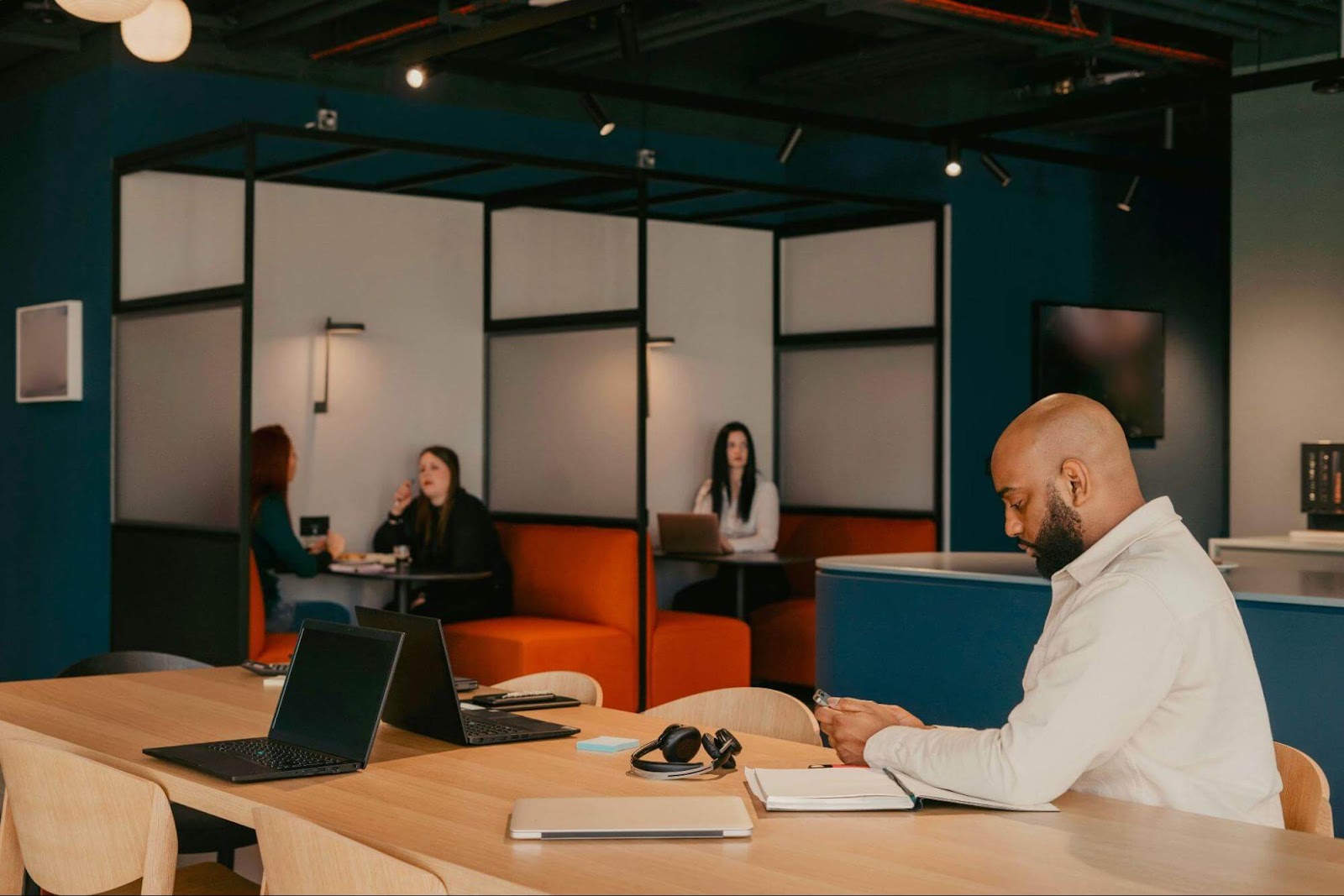
It's not that coffee shop calls are unprofessional by default — plenty of freelancers manage them fine with good headphones and a quiet corner — but a dedicated room removes the risk entirely, which matters most for a first call with a new client who doesn't yet have context for the background noise.
Conferences and events built around freelance creative work are also a good place to scout which co-working spaces in a given city actually live up to their reputation before committing to a membership.
Using Both Deliberately Instead of Defaulting to One
The most effective pattern isn't picking a permanent side between coffee shops and co-working spaces, but matching the choice to the day's actual task. A morning of quiet concept sketching might suit a quiet café corner just fine, while an afternoon packed with client calls and file uploads calls for a co-working space's reliability.

Keeping both options available, rather than committing exclusively to one, also hedges against the days when a usual coffee shop is unexpectedly packed or a co-working space is fully booked, which happens more often than either option's regulars tend to admit, especially during exam season near universities or the lunch rush in a busy downtown co-working building, when every open seat, every working power outlet, and every reasonably quiet corner tends to disappear within minutes of arriving. This discussion on shared office spaces covers more of the trade-offs between different shared work environments.
A Quick Comparison
- Cost: Coffee shops cheaper for occasional use; co-working cheaper for daily use
- Wi-Fi reliability: Co-working spaces generally more consistent
- Noise control: Co-working spaces offer more choice between quiet and ambient zones
- Client calls: Co-working meeting rooms remove background-noise risk entirely
- Flexibility: Coffee shops win for spontaneous, short sessions with no booking needed
Frequently Asked Questions
Is a co-working membership worth it for an occasional freelancer?
Probably not if work outside the home happens only once or twice a week — a day-pass option or an occasional coffee shop visit usually makes more financial sense.
How do I handle unreliable Wi-Fi at a coffee shop?
A mobile hotspot as backup removes most of the risk, especially for anything time-sensitive like a client deliverable.
Are co-working spaces only useful for full-time remote workers?
No — many offer flexible day passes specifically for freelancers who only need the space occasionally, without a long-term commitment.
What's the best way to take a client call outside a quiet office?
A co-working meeting room is the safest option, but good noise-cancelling headphones and a quiet corner can work for a coffee shop call in a pinch.